

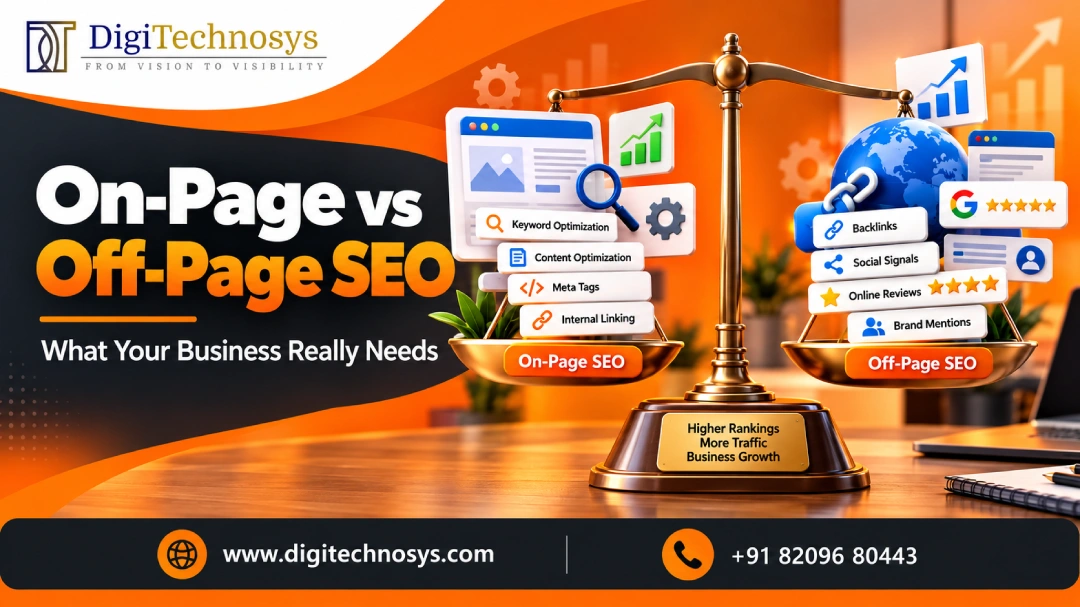
When businesses start investing in SEO, one of the first questions they ask is where the effort should go. Should you focus on improving your own website, or on getting other websites to mention and link to you? The honest answer is both. On-page SEO and off-page SEO are two halves of the same strategy, and a website that relies on only one of them will almost always struggle to reach the first page of Google.
In this guide, we explain the difference between on-page and off-page SEO in simple terms, what each one includes, and how DigiTechnosys combines them into a balanced strategy that helps businesses rank in competitive markets around the world.
What Is On-Page SEO?
On-page SEO covers everything you control on your own website. Its job is to make each page relevant, useful and easy for search engines to understand. When on-page SEO is done well, Google knows exactly which searches each page should appear for.
Key on-page SEO elements include:
- Keyword research. Finding the words and phrases your customers actually type into Google, along with their search volume and intent.
- Title tags and meta descriptions. Writing clear, keyword-focused titles and descriptions that appear in search results and encourage clicks.
- Heading structure. Using H1, H2 and H3 headings to organise content logically for readers and search engines.
- Content quality. Creating helpful, original content that fully answers the searcher’s question better than competing pages.
- Image optimisation. Compressing images, adding descriptive file names and writing alt text.
- Internal linking. Linking related pages together so visitors and crawlers can discover more of your content, and so important pages receive more authority.
- URL structure. Keeping URLs short, readable and descriptive.
- Schema markup. Adding structured data that helps your pages earn rich results such as FAQs, reviews and business information.
What Is Off-Page SEO?
Off-page SEO covers the signals that come from outside your website. Its job is to build authority and trust. Search engines look at how other websites, customers and platforms talk about your brand to decide whether your pages deserve to rank above competitors.
Key off-page SEO activities include:
- Quality backlinks. Earning links from relevant, trusted websites in your industry. Each quality link acts like a vote of confidence.
- Digital PR. Getting your business featured in online publications, industry blogs and news sites.
- Brand mentions. Building awareness so your brand name appears across the web, even without a direct link.
- Reviews and reputation. Collecting genuine customer reviews and responding professionally, which builds trust with both people and search engines.
- Business profiles and citations. Keeping your business name, address and phone number consistent across reputable platforms, especially important for local searches.
- Social signals. Active social media profiles help your content reach more people, which can lead to more links and mentions.
On-Page vs Off-Page SEO: The Key Differences
- Control: On-page SEO is fully in your control; off-page SEO depends on how others respond to your brand.
- Purpose: On-page SEO builds relevance; off-page SEO builds authority.
- Speed of results: On-page changes can show results within weeks; off-page authority grows steadily over months.
- Examples: On-page means content, titles and internal links; off-page means backlinks, PR and reviews.
Why You Need Both
Imagine two pages targeting the same keyword. The first has excellent content but no other website has ever linked to it. The second has strong backlinks but thin, poorly organised content. Neither is likely to rank well for long. Google wants pages that are both relevant and trusted.
This is why many businesses get stuck on page two. They may have invested heavily in one side of SEO while ignoring the other. A balanced strategy closes that gap. Strong on-page work makes every backlink more valuable, and strong off-page signals help well-written pages climb above competitors.
Both also depend on a healthy technical foundation. Before starting any campaign, we recommend a technical SEO audit to make sure search engines can crawl and index your site properly.
How DigiTechnosys Combines On-Page and Off-Page SEO
- Audit and research. We review your website, competitors and target markets, then build a keyword map that assigns the right keywords to the right pages.
- On-page optimisation. We improve titles, headings, content, images, internal links and schema across your key pages.
- Content creation. We publish helpful blogs and service pages that target new keywords and attract natural links.
- Authority building. We earn relevant backlinks and mentions through outreach, PR and partnerships, always following search engine guidelines.
- Reporting. Every month, you see rankings, traffic and enquiries, along with what we did and what comes next.
For online stores, the same principles apply with extra work on product and category pages, which we explain in our guide to ecommerce SEO services.
Frequently Asked Questions
Which should I start with? Start with on-page SEO and technical fixes, since they are in your control and make later off-page work more effective.
Are paid backlinks a good idea? No. Buying low-quality links can lead to penalties. We focus on earning genuine, relevant links.
How long until I see results? On-page improvements often show results within weeks, while full SEO results usually build over three to six months.
Build a Balanced SEO Strategy
Ranking well requires relevance and authority working together. DigiTechnosys provides on-page and off-page SEO services for businesses worldwide, built on clean technical foundations and transparent reporting. Contact DigiTechnosys today to speak with our SEO team and start building a strategy that reaches customers wherever they search.